Bicycle crashes tend to happen in situations riders know well; a car turning across a bike lane, a door swinging open without warning, a driver passing too closely, or a pothole that throws a cyclist off balance. These incidents are not unusual or rare. They account for a significant number of serious bicycle injuries each year.
Because cyclists have little physical protection, even what might seem like a minor traffic mistake can lead to substantial harm. Looking at the most common types of bicycle accidents helps explain where these crashes typically occur and why they happen as often as they do.
If your bicycle accident resulted in injuries, a qualified Phoenix bicycle accident lawyer can help determine who may be responsible and what compensation may be available.
Common Types of Bicycle Accidents
The most common types of bicycle accidents involve collisions with motor vehicles, intersection crashes, dooring incidents, road hazards, fixed-object impacts, and bike-on-bike collisions. Many of these crashes occur at intersections, along urban corridors, or in areas with heavy traffic where vehicles and cyclists share limited space.
Collisions Between Bicyclists and Drivers
Collisions between bicyclists and motorists are among the most frequent and most serious types of bicycle accidents. Drivers owe a duty to operate their vehicles safely and to remain attentive to all road users, including cyclists.
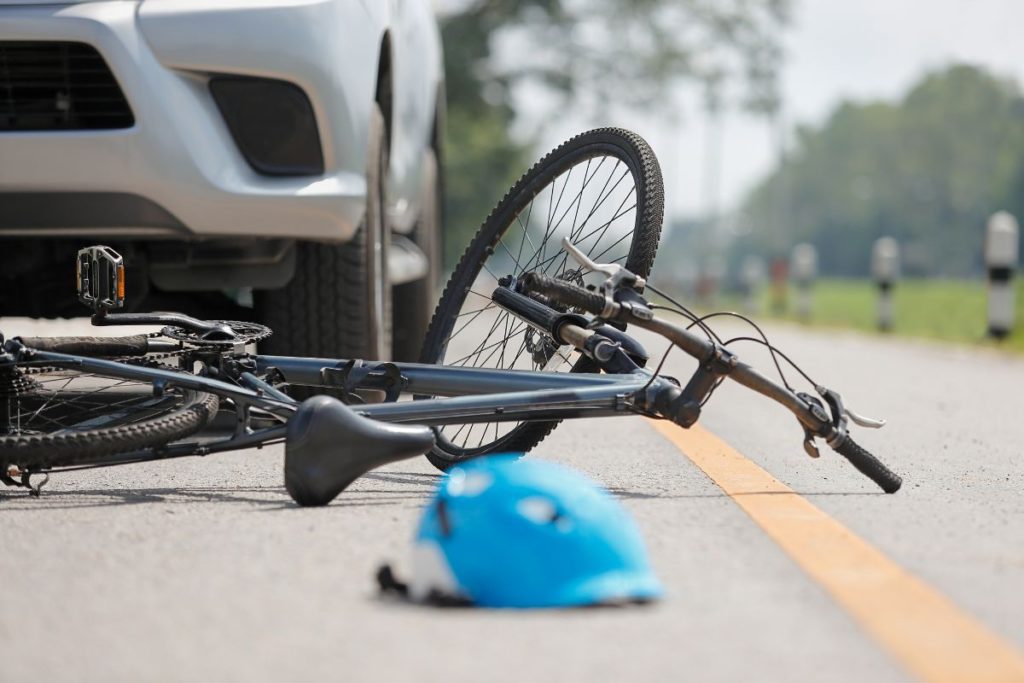
Common driver behaviors that contribute to bicycle crashes include:
- Distracted driving
- Following too closely
- Speeding
- Fatigued driving
- Failure to yield
- Running stop signs or red lights
- Unsafe lane changes or turns
- Driving under the influence
Because bicycles are smaller and less visible than passenger vehicles, especially near blind spots or at intersections, even brief inattention can lead to a collision. Larger vehicles, including SUVs and trucks, may present additional visibility challenges.
Accidents Involving Bicyclists and Pedestrians
Bicycle collisions do not always involve motor vehicles. In busy urban areas, conflicts between cyclists and pedestrians are also common.
Pedestrians have a responsibility to follow traffic signals, remain aware of their surroundings, and avoid stepping unexpectedly into bike lanes or shared pathways. Distraction, particularly from mobile devices, can reduce reaction time and awareness.
When a pedestrian enters a cyclist’s path without warning, the rider may have little time to brake or maneuver safely. These incidents can result in injuries to both parties and may raise complex questions about comparative fault.
Bike-on-Bike Crashes
In areas with heavy cycling traffic, collisions between bicyclists can occur. These crashes may happen during group rides, on multi-use paths, or in congested bike lanes.
Impacts may occur from the side, head-on, or from the rear. In some cases, a single collision can trigger a chain reaction involving multiple riders. Determining responsibility in bike-on-bike crashes can be fact-specific and may depend on spacing, signaling, speed, and right-of-way considerations.
Car Door Accidents (Dooring)
Dooring incidents are particularly common in urban settings where vehicles are parked along streets with adjacent bike lanes.
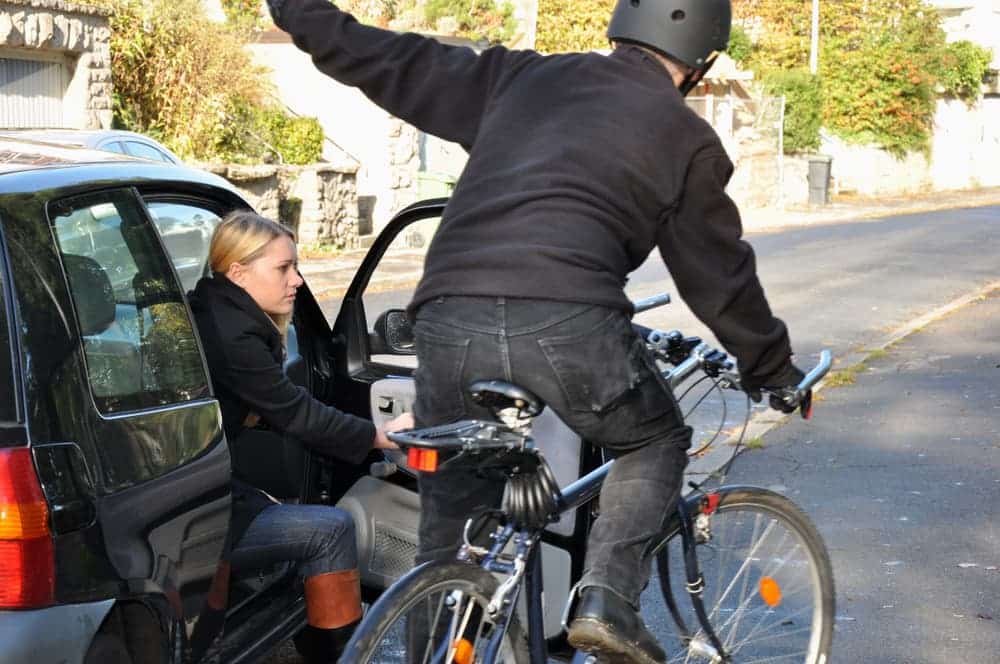
A dooring accident occurs when a driver or passenger opens a vehicle door into the path of an approaching cyclist. Because bicycles travel close to parked cars, riders often have limited time and space to avoid a suddenly opened door.
In some situations, a cyclist may swerve to avoid the door and enter a traffic lane, increasing the risk of a secondary collision. Drivers are generally expected to check for approaching traffic, including bicycles, before opening a vehicle door.
Cyclists Being Run Off the Road
Not all bicycle injuries involve direct impact. A cyclist may be forced off the roadway by a vehicle’s movement, even without contact.
This can occur when:
- A motorist turns or merges without sufficient clearance
- A vehicle exits a driveway or parking space without checking for approaching cyclists
- A driver passes too closely, crowding the rider out of the lane
Being run off the road can result in serious injuries, particularly if the cyclist loses control or strikes a curb, shoulder, or roadside obstacle.
Collisions Between Bicyclists and Fixed Objects
In some cases, a cyclist may collide with a fixed object such as a pole, signpost, barrier, or improperly placed roadside structure. These incidents often arise when a rider is forced to react suddenly — to avoid a vehicle, pedestrian, road defect, or other hazard.
Urban infrastructure, construction zones, and poorly designed roadway features can reduce maneuvering space and increase risk. In evaluating these crashes, it is important to consider whether roadway design, maintenance, or obstruction placement contributed to the incident.
Impacts with solid objects can lead to significant injuries, particularly to the head, neck, and upper body.
Road Hazard Accidents
Road conditions that may pose minimal risk to larger vehicles can be dangerous for cyclists. Uneven surfaces and debris can destabilize a bicycle quickly.
Common roadway hazards include:
- Potholes
- Loose gravel
- Debris in bike lanes
- Poor lighting
- Cracked or uneven pavement
- Inadequate drainage
Construction zones may present additional risks if barriers, signage, or lane markings are unclear or incomplete. When roadway conditions contribute to a crash, liability may extend beyond individual drivers.
Bicycle Defect Crashes
Some bicycle accidents result from equipment failure rather than external traffic conditions. Design or manufacturing defects in components such as brakes, forks, tires, or frames can cause sudden loss of control.
When a mechanical defect contributes to a crash, product liability principles may apply. Determining whether a defect was present often requires technical evaluation of the bicycle and its components.
How Common Bicycle Accidents Are and Why They Happen
Bicycle accidents are more common than many people realize. In a recent year, more than 41,000 bicyclists were injured in traffic-related crashes nationwide, and nearly 1,000 lost their lives. Over the past several years, the annual average of bicycle-related injuries has remained above 45,000. These numbers reflect a consistent and ongoing safety concern for cyclists.
Most bicycle accidents are not random events. They occur under predictable circumstances and for identifiable reasons.
Many crashes happen at or near intersections, where drivers fail to yield, misjudge a cyclist’s speed, or turn across a bike’s path. Left-turn collisions and right-hook crashes are particularly common. Urban areas also see a high number of “dooring” incidents, where a driver or passenger opens a vehicle door into an oncoming cyclist’s path.
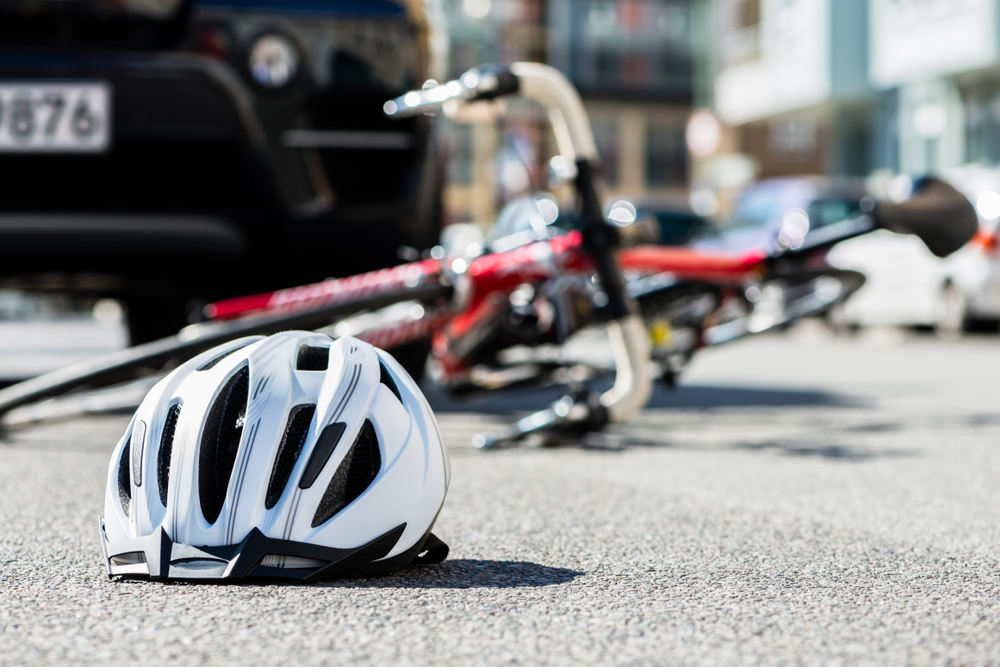
Driver behavior plays a significant role. Distracted driving, speeding, unsafe passing, and failure to check blind spots frequently contribute to bicycle collisions. Because bicycles are smaller and less visible than passenger vehicles, even a brief lapse in attention can result in serious injury.
Road conditions also matter. Potholes, loose gravel, poorly maintained pavement, inadequate lighting, and construction zones can destabilize a bicycle more easily than a car or truck. Cyclists have less protection and less margin for error when roadway hazards are present.
Unlike occupants of motor vehicles, bicyclists are largely unprotected in a crash. That lack of structural protection is one reason bicycle accidents so often result in serious or life-altering injuries.
Understanding how and why these accidents occur is an important step in evaluating liability and determining what legal options may be available after a crash.
Injuries Resulting from Bicycle Collisions
Injuries from bike accidents can be severe and life-altering. Common injuries bicycle riders are most at risk of suffering in any type of collision include:
- Brain injuries: Bicyclists often suffer head and brain injuries, including skull fractures and concussions, especially if the law doesn’t require helmets.
- Spinal cord injuries: A spinal cord injury damages some part of the bike rider’s spinal cord, which can cause permanent physical changes.
- Road rash: A type of friction burn, road rash occurs frequently when bicyclists are thrown off their bicycles and land on the asphalt.
- Broken bones: Bike riders can end up with fractured bones, like bones in the arms and legs, in any type of collision.
- Facial injuries: Even wearing a helmet can’t totally prevent facial injuries, with common injuries including eye injuries, dental injuries, and a broken or dislocated jaw.
Not only can bike accident injuries affect victims in the short term, but they can also leave a lasting impact. Depending on the type and severity of the injury, bicyclists can face certain complications, like amputations, permanent nerve damage, and scarring.
Medical treatment is key following a bicycle accident, but proper care can be costly. Pursuing compensation can help you avoid financial strain and ensure you can receive the treatment you need most to recover from your injuries as much as possible.
Who’s At Fault for a Bike Accident?
The first step in pursuing a claim after a bicycle collision is identifying how the crash occurred and who may be legally responsible. Determining fault is critical because liability directly affects your ability to recover compensation.
Depending on the circumstances, several parties may be held accountable for a bicycle accident:
- Car and truck drivers: When motorists drive negligently — by failing to yield, speeding, driving distracted, or violating traffic laws — they may be held liable for resulting injuries.
- Employers: If a driver causes a crash while performing job-related duties, the employer may share responsibility under certain legal principles.
- Pedestrians: A pedestrian who enters a cyclist’s path without warning or ignores traffic controls may be fully or partially at fault.
- Other bicyclists: In some situations, another cyclist’s unsafe maneuver or negligence may contribute to a collision.
- Governmental entities: Local or state agencies are responsible for maintaining reasonably safe roadways. If hazardous road conditions contribute to a crash, a government entity may bear liability.
- Construction companies: Improperly secured work zones, inadequate signage, or unsafe roadside conditions may expose contractors to responsibility.
- Bike designers, manufacturers, or distributors: If a mechanical defect or design flaw contributed to the accident, a product liability claim may be appropriate.
Liability is one of the most important aspects of any compensation claim. In some cases, more than one party may share responsibility. Identifying all potential sources of fault allows injured cyclists to explore available recovery options, which may include insurance claims or personal injury litigation.
Damages Available for Bicycle Crash Cases
Damages can aid in minimizing your accident-related financial burdens, especially those stemming from your injuries. The damages you’re entitled to pursue are based on the specifics of your case, but may include:
- Past and future medical expenses, including ambulance transportation, hospital stays, and surgery
- Rehabilitation
- Lost wages
- Diminished or lost earning capacity
- Emotional distress
- Pain and suffering
- Disability
- Scarring and disfigurement
- Loss of enjoyment of life
The value of your claim depends on numerous factors. To help determine how much your collision claim is worth, your bicycle accident attorney must evaluate the following details:

- The severity of your injuries
- How your injuries have and will affect your life
- The total cost of your medical bills
- How much time you’ve needed to take off from work and the total of your lost earnings
- Whether you can return to your occupation once recovered
- How your bike accident has affected you mentally and emotionally
- Any other monetary and non-monetary losses you’ve suffered as a result of your accident
Understanding the value of your claim can ensure you end up with a proper settlement. Your accident lawyer can safeguard your rights to fair compensation and fight diligently for the best possible case result.
How a Bicycle Accident Attorney Can Help
Accident claims are difficult to navigate, especially when you’re also focused on your physical recovery and the stresses of post-accident living. Fortunately, you don’t have to do it alone. A bike accident lawyer can take on your case and handle your claim properly, efficiently, and timely.
When you have a skilled bike accident attorney on your side, you can feel confident knowing your claim is in the most capable hands. Bicycle accident lawyers have experience and have all the right resources to handle all case-related tasks, from investigating your accident and calculating your damages to communicating with insurance companies and negotiating a settlement.
After a bike accident, you may feel confused, anxious, and unsure. A bike accident lawyer can provide much-needed guidance, direction, and high-quality representation throughout your claim.
Following a Bike Crash, Don’t Wait to Take Action
If you’re interested in pursuing compensation from the at-fault party in your bike accident, you have limited time to do so. Therefore, the sooner you discuss your situation with a seasoned bicycle accident attorney, the quicker they can begin working on your claim and taking action on your behalf.
Regardless of the type of bicycle accident you experience, you should not hesitate to seek assistance from a local attorney. A lawyer can explain your legal rights and options as a bike accident victim and create a strong plan for your case.
Case evaluations with a Phoenix injury lawyer are free, so you have nothing to lose by scheduling yours today. They will listen to your story and determine whether you have a valid case to hold another party liable for your injuries.ee, so you have nothing to lose by scheduling yours today. They will listen to your story and determine whether you have a valid case to hold another party liable for your injuries.